Redlands Community Center History: How It Became a Landmark
August 13, 2026
August 13, 2026
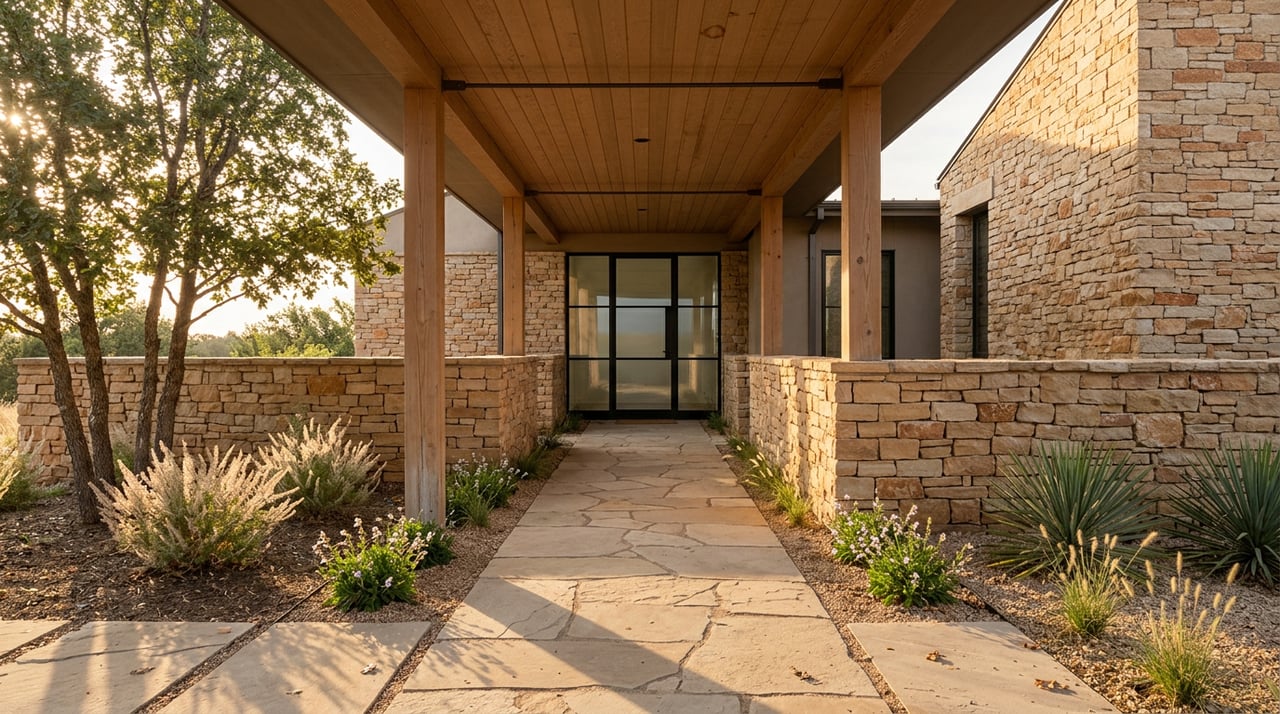
Drive west on Broadway toward the bridge over the Colorado River and you'll pass a hill with a Spanish-style building on top of it, red tile roof, thick stucco walls, a wooden arch out front that catches the afternoon light. Most people who live in the Redlands have been past it hundreds of times. Fewer could tell you what it actually is, beyond a place where a cousin got married once or a company held its holiday party.
Here's the part that surprises most longtime residents: that building was never meant to serve the Redlands at all. It was built as a private golf club for fifty businessmen. The neighborhood only got to keep it because a group of women bought the wreckage of that club during the Depression and spent the better part of a decade paying it off with quilts and carnival tickets. And the method they used then is, almost exactly, the method still keeping the building standing in 2026.
The building at 2463 Broadway went up in 1920, and the nine-hole course around it opened the following August, on August 18, 1921, according to the Redlands Community Center Foundation's own history. It sat on 160 acres, funded and used by roughly fifty local businessmen who lived in the Redlands in that era.
The golf itself would look strange to anyone today. The Redlands' clay soil was too hard to hold a wooden tee, so golfers built their own tees on the spot, mixing sand from cans left at each hole with a splash of water. It worked, but it wasn't glamorous, and neither was the club's business model. Membership was limited to those who could afford it, which meant the club's fate was tied to the fortunes of a small circle of men, not to the neighborhood around it.
The Great Depression ended that arrangement. The golf club couldn't sustain itself, and in 1935 the property was sold to the Redlands Women's Club for $5,000, a sum that reads as almost nothing today but represented a serious commitment from a group with far less capital than the businessmen who'd built the place. The club held its first meeting in the building on February 10, 1937, roughly sixty-eight women strong, drawn from nearly every family then living in the Redlands.
What happened next is the part worth sitting with. It took the women eight years, eight carnivals, and twenty quilts, sold and served up alongside countless dinners, to retire the mortgage on a building that fifty men hadn't been able to keep afloat. There was no single donor and no refinancing deal. There was just repeated, unglamorous fundraising, year after year, until the debt was gone.
One of the last living links to that era was Clara Ziegler, described by a longtime volunteer in a 2018 feature in Beacon Senior News as the woman who ran the center's kitchen "like a drill sergeant." She was the last surviving original member of the Women's Club and died in November 2016 at age 93, having spent decades making sure the building kept doing the job those first sixty-eight women signed up for.
The Redlands Women's Club formally became the nonprofit Redlands Community Center in 1983, and the foundation that runs it today still operates on the same basic premise: raise money through use of the building, then put that money back into keeping it standing. In September 1994, the building earned a spot on the Colorado Historical Society Register, official recognition of the same Mission-style architecture that still stops people on Broadway today: the arched windows on its northeast face, the stained glass worked into some of the front door lights, and the hand-laid stone around its two fireplaces.
The scale of the place has shrunk considerably since its country club days. Here's what that looks like side by side.
| 1921 | 2026 | |
|---|---|---|
| Land | 160 acres and a nine-hole golf course | About 5 acres |
| Who could use it | Roughly 50 paying club members | Anyone who books it, volunteers, or attends an event |
| How it stayed solvent | Eight years of carnivals and quilt sales to pay off a $5,000 mortgage | A single Saturday craft fair with more than 42 vendors |
| Who keeps it running | A membership dues structure | A foundation, a building manager, and volunteers |
The building turned 106 this year, and according to a KKCO11 News report from April 2026, it's in the middle of another round of the same kind of work that's kept it alive since the 1930s. The roof has already been replaced, and the downstairs area has picked up minor upgrades. Still on the list this year: refinishing the original wood floors and repainting the wooden arch out front that has become something of a signature for the place.
Lynda VanGarvee, who has helped care for the building for three years, told the station plainly what she thinks the place actually represents. "The men built it, but the women made it community," she said, adding with a laugh that if anyone thinks the building is haunted, it's haunted by "the wonderful, beautiful ladies who started this community." VanGarvee works alongside building manager Tara Marshall to keep the place in shape.
This spring, on April 25, the foundation ran its latest fundraiser to help cover those repairs: a craft fair with more than 42 local vendors, the Jukebox Jamboree food truck, and a visit from Happy Little Rescue, held free of charge from 9 a.m. to 4 p.m. right there at 2463 Broadway.
What strikes me about that lineup, the vendor tables, the food truck, the free admission, is how closely it mirrors what the Women's Club was doing in the 1930s. No developer has stepped in to buy the property. No single large donor has covered the repair bill. There's no capital campaign with a naming-rights tier attached to the new roof. The building is being kept alive the exact same way it was saved the first time: a nonprofit asking the people who live nearby to show up, spend a little money, and keep the lights on for another season.
That's a different kind of neighborhood infrastructure than most people think about when they picture what holds a place like the Redlands together. It isn't the golf course, the master-planned developments going up nearby, or the trail network. In this case, it's a hundred-year-old building that survives because enough people keep choosing, one craft fair and one quilt raffle at a time, to pay for its upkeep rather than let it go.
If you've lived in the Redlands for any length of time, there's a decent chance you've driven past this building without knowing any of that. It's worth a visit, whether that means touring it for a family gathering, checking the foundation's calendar for the next fundraiser, or just stopping to read the historical marker the next time you're on Broadway near the bridge.
I've spent my career helping people put down roots in this part of the Grand Valley, and buildings like this one are a big part of why the Redlands feels like more than just a good view and a short commute. If stories like this are the reason you love this neighborhood, or if you're ever curious what your own piece of it is worth, I'd love to talk it through. Reach out to Michelle Ritter any time. Let's connect.
Stay up to date on the latest real estate trends.
A thoughtful, results-focused approach designed around each client’s unique goals. Every project is handled with clarity, attention to detail, and a collaborative process that ensures effective, well-aligned outcomes from start to finish.