Guide To Buying Acreage Property In Palisade
April 23, 2026
April 23, 2026
Thinking about buying acreage in Palisade? It can be an exciting move, but it is also very different from buying a home on a standard neighborhood lot. In this part of Mesa County, land often comes with irrigation features, private systems, and access questions that deserve a closer look before you close. This guide will help you understand what to review, what to ask, and how to approach an acreage purchase with more confidence. Let’s dive in.
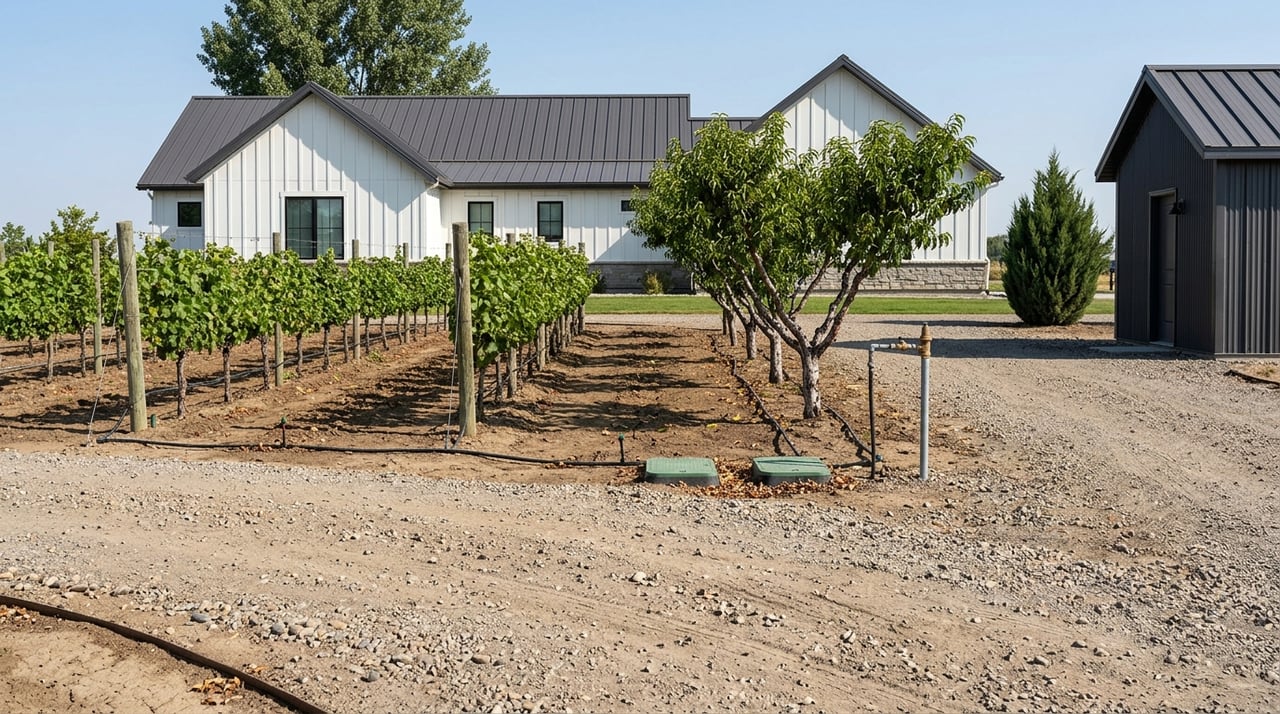
Palisade is widely known for orchards, vineyards, open views, and its agricultural setting. The Town of Palisade highlights the area’s distinct character, while the Palisade Irrigation District delivers Colorado River irrigation water to farms and residential users across the eastern Grand Valley. That means acreage here may involve more than a house and a fence line.
You may also be buying next to active agricultural land, irrigation canals, or private roads. Mesa County notes that many rural roads are private and that canals and ditches are active water-delivery corridors, not recreational features. For you as a buyer, that means land use, access, and maintenance matter just as much as square footage.
One of the first things to confirm is how you legally get to the property. A parcel may connect directly to a county road, share a driveway with another property, or rely on a private easement. Each setup can affect your rights, your responsibilities, and how easy the property is to use every day.
Mesa County states that a driveway permit is required when a new driveway connects to a county right-of-way, and no new access or road may be constructed or used without an Access Permit. If access crosses someone else’s property, the county requires an easement agreement before approval. That is why recorded access documents are so important during your due diligence period.
The county’s site-plan process also brings practical details into focus. Property lines, easements, rights-of-way, streams, drainages, septic systems, leach fields, and driveways may all need to be shown before construction begins. On acreage, those details shape how you park, build, store equipment, or add outbuildings in the future.
Online maps can be helpful when you first start researching a property, but they are not the final word. The Town of Palisade says its GIS map tools can show streets, buildings, zoning, address points, and town limits, but they are not a legal description or a substitute for a survey or official records.
That matters even more with acreage. Fence lines, ditches, and road paths do not always line up with legal boundaries the way you might expect. If boundaries, easements, or access points are important to your plans, you will want to verify them carefully.
Water is one of the biggest issues in any rural property purchase, and in Palisade, it can take several forms. Some properties are connected to town utilities, while others depend on a private well, irrigation delivery, or a combination of systems. The right question is not just, “Is there water?” but “What kind of water is it, and what transfers with the property?”
Within town, Palisade Public Works handles drinking water, wastewater and sewer, trash, and streets. Outside municipal sewer service, Mesa County’s OWTS program covers on-site wastewater treatment systems. So even within the broader Palisade area, utility setup can vary quite a bit from one property to the next.
Colorado State University Extension explains that water rights in Colorado are private property rights under prior appropriation. Buyers should not assume irrigation water automatically comes with the land. In some cases, ditch-company shares may be sold or inherited, while irrigation-district delivery entitlements are usually tied to land within the district boundary.
If a property includes irrigation, it is worth slowing down and reviewing the details. The Palisade Irrigation District provides raw irrigation water in the Grand Valley, but it also notes that open ditches are not the district’s maintenance responsibility. Landowners or users are expected to prepare them for irrigation season, and delivery may be refused if a ditch is not ready.
That means irrigation can bring ongoing work, not just a benefit on paper. The district also notes that irrigation-related issues on private systems can require water shutoff until repairs are complete, and annual assessments may appear as a special line item on Mesa County property tax notices. If irrigation is part of why you want the property, make sure you understand both the value and the responsibility.
For acreage with a private well, the well permit is one of the first documents to review. Colorado’s Division of Water Resources maintains searchable well permit records, including allowable uses and available construction or pump installation records. This can help you understand what the well is legally allowed to support.
That is especially important on smaller acreage. DWR notes that in most areas, a well on a tract under 35 acres is typically limited to a single-family dwelling unless a more complex water-supply arrangement applies. If you are thinking about animals, irrigation, or additional structures, those allowed uses matter.
Water quality is another practical step. CSU Extension recommends yearly lab testing for private-well drinking water, and Mesa County Public Health operates a certified regional lab. For you, that means testing is not just a nice idea. It is part of understanding how the property functions day to day.
Wastewater is another area where Palisade acreage can differ from a town lot. Some properties are connected to municipal sewer, while others use an on-site wastewater treatment system. If the home is not served by sewer, the condition and history of the septic system should be part of your review.
According to the EPA, septic systems should generally be inspected every 1 to 3 years and pumped every 3 to 5 years. The property owner is responsible for operation, maintenance, and repairs. The EPA also recommends protecting the drainfield, avoiding vehicle traffic over it, and keeping excess water away from it.
For a buyer, that means septic age, service records, and drainfield location are real ownership issues, not minor side notes. If the system is older or poorly documented, you may want more clarity before moving forward.
Acreage ownership often includes costs and chores that do not come with a standard subdivision home. Depending on the parcel, that could include weed management, fencing, irrigation upkeep, road maintenance, ditch work, or septic service. These items may not always stand out in a listing, but they still affect your monthly and annual budget.
Mesa County’s noxious weed program says landowners are responsible for managing listed noxious weeds on their property. CSU materials on small acreage ownership also point to fencing, irrigation, pasture, weeds, and livestock as common stewardship topics. In other words, owning land usually means taking care of land.
If the parcel includes a ditch or canal, CSU Extension notes that users may have to attend workdays or annual meetings, share maintenance costs, allow access for repairs, and keep ditch corridors clear. Mesa County also notes that canal easements are legal access corridors and should not be obstructed. Those obligations can shape how you use the property long after closing day.
When you buy acreage in Palisade, it helps to think beyond the house itself. A beautiful setting and extra space can be a great fit, but the details behind the property matter. The more clearly you understand access, water, wastewater, and maintenance, the better prepared you will be to make a sound decision.
Here is a practical checklist to bring into your home search:
Buying acreage is not something you want to rush. In Palisade, a property can offer orchard views, open space, and room to breathe, but it can also come with unique systems and obligations that deserve careful review. A calm, organized process helps you protect both your investment and your plans for the property.
If you are thinking about buying acreage in Palisade, working with a local advisor can help you ask the right questions early and stay focused on the details that matter most. When you are ready to talk through your next move, Michelle Ritter is here to help you navigate the process with clarity and local insight.
Stay up to date on the latest real estate trends.

A thoughtful, results-focused approach designed around each client’s unique goals. Every project is handled with clarity, attention to detail, and a collaborative process that ensures effective, well-aligned outcomes from start to finish.