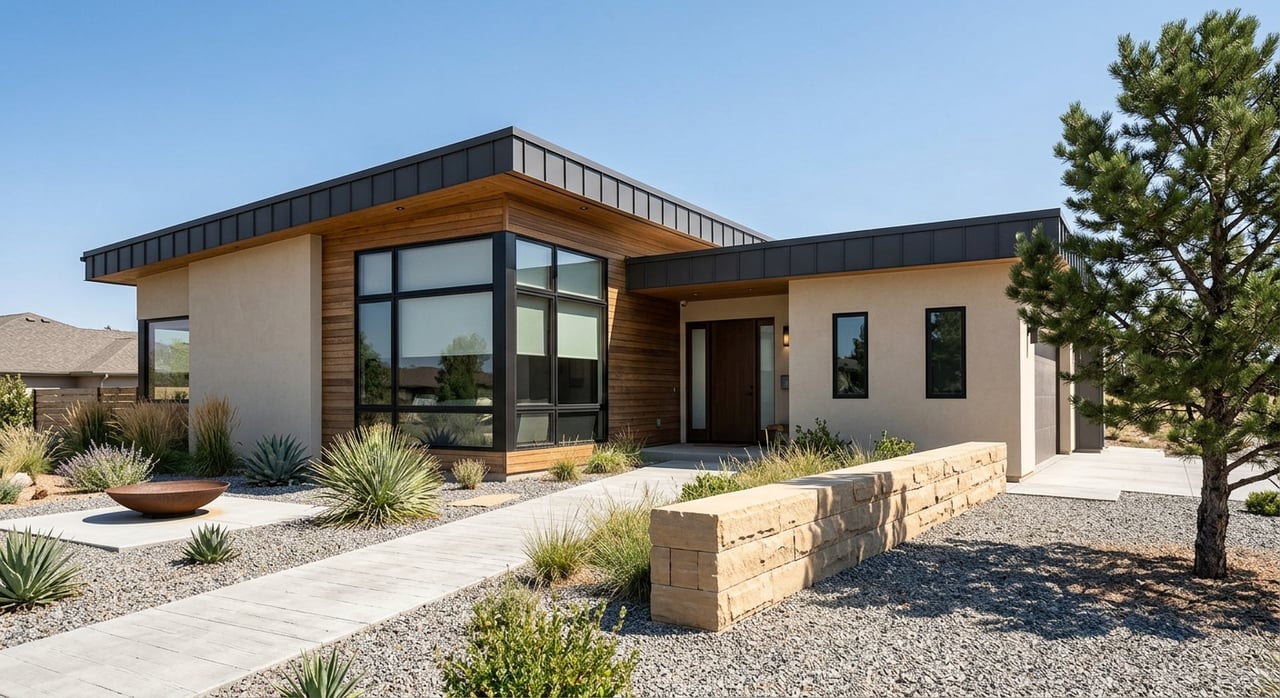
Redlands Or Palisade? How To Choose Your Next Home
July 2, 2026
July 2, 2026
If you are deciding between Redlands and Palisade, you are really choosing between two very different ways of living in the Grand Valley. Both areas offer strong appeal, but they serve different priorities when it comes to space, convenience, recreation, and day-to-day rhythm. If you want a clearer picture of which one fits your next chapter, this guide will walk you through the differences in practical terms. Let’s dive in.
Redlands and Palisade may both be part of the same broader region, but they do not feel the same on the ground. Palisade is a small town with about 2,584 residents in roughly 1.2 square miles, which gives it a more compact, town-centered feel. Redlands has about 9,061 residents across 13.35 square miles, so it tends to feel more spread out and neighborhood-based.
That size difference matters when you picture your daily life. In Palisade, you are more likely to feel closely connected to a defined town core and a scenic rural edge. In Redlands, you are generally choosing a part of the larger Grand Junction area, with a more urban-adjacent layout and a broader mix of neighborhoods.
For many buyers, the biggest question is simple: how easy will everyday life feel? Based on current ACS data, Redlands has a mean travel time to work of 19.3 minutes, while Palisade comes in at 32.3 minutes. That does not tell the whole story for every household, but it does point to a real difference in typical access.
Redlands is part of Grand Junction’s larger urban planning framework. In practical terms, that usually means closer access to jobs, errands, public facilities, and city services. If your week is packed with commuting, appointments, and daily stops, that convenience can make a big impact.
Older planning guidance for Redlands also highlights access to public facilities, transit routes, parks, and neighborhood connections. That supports the idea of Redlands as the more day-to-day efficient option for many buyers.
Palisade often asks you to trade some convenience for a more distinct setting. If you value a small-town atmosphere, scenic surroundings, and outdoor access more than a shorter drive, that trade may feel worthwhile. For some buyers, the pace and character of Palisade are exactly the point.
The housing choices in Redlands and Palisade can look very different, especially once you move beyond the town core. That is one of the biggest reasons your home search may feel very different in each area.
The Redlands Neighborhood Plan describes detached single-family homes as the predominant housing type, with multifamily housing making up less than 10% of the housing stock at the time of the study. The plan also supports a mix of housing types and densities, including clustered units, zero-lot-line homes, and mixed-density projects.
It also describes some low-density residential areas as lots ranging from one-half acre to 2 acres, with some areas aligned with zoning that allows up to 4 units per acre. For you as a buyer, that means Redlands often offers an established single-family neighborhood feel, while still allowing for a range of home styles and lot sizes.
Palisade is not just one thing. The town code includes low-, medium-, and high-density residential districts, plus mixed-use, town center, commercial, agricultural or forestry transitional, and light industrial districts. That means the town core can support more compact living patterns than some buyers expect.
At the same time, Mesa County’s rural land-use plan shows a much stronger large-lot pattern around Palisade’s outer areas. In the Palisade Buffer, land north of the Colorado River is classified as R/A10, with a 10-acre average lot size, and land south of the river is EOM 10, with a 10-acre minimum lot size. These areas are intended to help protect rural landscapes and agricultural importance.
If you are drawn to open space, acreage, or a more rural edge-of-town feel, that is a major point in Palisade’s favor.
Lifestyle matters just as much as square footage. If your ideal home choice is tied to how you spend your weekends, mornings, or evenings, this part of the comparison can be especially helpful.
Redlands has a long-standing reputation for neighborhood recreation and trail connectivity. Planning documents for the area note parks and open space, two golf courses, and numerous trails and trail connections within the planning area.
That makes Redlands appealing if you want to stay close to Grand Junction amenities while still having regular access to outdoor spaces. The recreation here tends to feel integrated into neighborhood living and daily convenience.
Palisade’s recreation story is more directly tied to the outdoors and scenic landscape. Mesa County says the One Riverfront Trail System follows the Colorado and Gunnison rivers and creates a near-contiguous path between Fruita, Grand Junction, and Palisade, supporting activities like biking, bird watching, fishing, walking, and jogging.
Palisade is also connected to higher-profile outdoor destinations. COTREX lists the Palisade Plunge as a 32-mile trail with an elevation range from 4,736 to 10,732 feet, and the Bureau of Land Management describes the Palisade Rim area east of town as a close-to-home recreation destination with wide views of the Grand Valley, Colorado River, Little Book Cliffs, and Grand Mesa.
If outdoor access is not just a bonus but a central part of your lifestyle, Palisade may feel like the stronger fit.
Current ACS data shows the median value of owner-occupied housing units at $487,500 in Redlands and $404,600 in Palisade. That does not mean one market is better than the other. It does suggest that the two areas may attract different buyer goals, property types, and lifestyle preferences.
In many cases, Redlands appeals to buyers who prioritize convenience, established neighborhoods, and closer-in access. Palisade often draws buyers looking for a more compact small-town setting, stronger agricultural identity, or a property with a more open and scenic feel.
If you are stuck between the two, it can help to strip the decision down to your daily priorities.
There is no universal winner between Redlands and Palisade. The better choice depends on how you want your home to support your routine, your pace, and your long-term plans. One buyer may value a shorter commute and neighborhood convenience, while another may gladly drive farther for open views, trail access, and a more distinct sense of place.
That is why it helps to look beyond listing photos and think about how each area feels on an ordinary Tuesday, not just on a sunny weekend. When you match the location to your real daily life, the right choice usually becomes much clearer.
If you are weighing Redlands against Palisade and want local guidance tailored to your goals, Michelle Ritter can help you talk through your options, tour homes with a local expert, and make your next move with confidence.
Stay up to date on the latest real estate trends.
A thoughtful, results-focused approach designed around each client’s unique goals. Every project is handled with clarity, attention to detail, and a collaborative process that ensures effective, well-aligned outcomes from start to finish.